If you’ve decided to bring in outside sales expertise, the next question is practical: what does this actually look like day to day? Here’s a realistic picture of how the first 90 days of a well-run engagement typically unfold — what you’ll be asked for, what gets built, and what you should hold the engagement accountable to delivering.
No fluff, no generic frameworks. Just a proven operator who’s built and fixed sales systems from the ground up.
Before Day One: Alignment
Before any diagnostic work begins, you should expect a detailed onboarding conversation that covers your business model, current sales structure, pipeline data, rep makeup, and your definition of success. A consultant who jumps straight into recommendations without this context is skipping the most important step.
You should also get clarity on what you’ll be asked to provide: CRM access, recorded calls if you have them, existing sales materials, and time from key people on your team for interviews. The quality of the output is directly tied to the quality of the input.
Weeks 1–2: Diagnostic Phase
This is the foundation everything else is built on. A rigorous diagnostic includes:
Pipeline audit — looking at win/loss rates, deal velocity, stage conversion, and where deals are dying
Rep interviews — understanding how each rep currently runs the process and where they see the gaps
Call review — listening to actual discovery and closing calls to identify patterns
Messaging analysis — evaluating your current positioning, outbound sequences, and proposal templates
ICP assessment — validating whether you’re targeting the right companies and stakeholders
At the end of this phase, you should receive a diagnostic report that clearly identifies the root causes of your current performance gaps — not just a list of symptoms.
Weeks 3–6: Build Phase
This is where the deliverables take shape. Depending on what the diagnostic surfaced, the build phase might include:
A revised ICP and targeting framework
A discovery methodology with specific question frameworks
Updated outbound messaging and sequencing
A qualification scorecard
A proposal and follow-up process
A full sales playbook that documents how the process runs from first touch to close
You should be involved in reviewing and pressure-testing these deliverables — they need to be grounded in how your business actually operates, not applied generically from another industry.
Weeks 7–12: Implementation and Coaching
Building a playbook and implementing one are different challenges. The implementation phase is where many engagements either deliver lasting results or fail to stick.
Expect live deal reviews, call coaching, manager enablement sessions, and accountability check-ins. Your reps should be executing the new process on live deals — not just reading about it in a document. The consultant’s job in this phase is to close the gap between the playbook and actual rep behavior.
What to Hold the Engagement Accountable To
Going in, you should establish clear success metrics. These might include close rate improvement, average deal size, pipeline conversion by stage, or time-to-close. Set a baseline at the start and track it.
A good consultant will push you to define these metrics upfront — because they know their credibility depends on moving them. If a consultant is vague about what success looks like, that’s a signal.
The goal of every engagement is simple — more signed contracts, less guesswork.
What Happens After 90 Days
Some engagements conclude at 90 days with a full handoff — the playbook is built, the team is trained, and internal leadership takes it from there. Others transition into an ongoing retainer for continued coaching and strategic guidance as the business grows.
Either is valid. The right structure depends on whether your internal leadership has the bandwidth and experience to sustain the new process independently.
Most broken sales processes don’t announce themselves. What they do is produce a steady stream of near-misses, stalled deals, and vague excuses that feel like bad luck but are actually symptoms of a structural problem. Here are five patterns that consistently point to process failure rather than rep performance.
This is what the work looks like — bringing a clear system to a team that’s ready to execute it.
1. Your Pipeline Always Looks Full, But Close Rates Don’t Reflect It
If your reps are always busy and your CRM is always stacked, but the number of deals that actually close is chronically below expectation, the problem is qualification. Deals are entering your pipeline that have no real path to a yes. This is almost always the result of a discovery process that doesn’t surface real buying criteria — or a team that’s optimized for pipeline volume over pipeline quality.
The fix is upstream: tighter ICP definition, a qualification framework with teeth, and a discovery process that gets to real budget, authority, and urgency before anything moves to proposal.
2. Deals Die at Proposal
When a high percentage of your deals stall or go dark after the proposal stage, it’s rarely a pricing problem. Almost always it’s a discovery problem. You’re sending proposals to people who aren’t the real decision-maker, who haven’t fully bought into the problem, or who haven’t felt the cost of not solving it.
A proposal should never be a surprise. If you’re in good discovery, the proposal is a formalization of a decision that’s already been made in principle. If deals are dying at proposal, work backward to what happened in discovery.
3. Every Rep Has a Different Version of the Process
Ask three of your reps how they run a discovery call. If you get three different answers, you don’t have a sales process — you have a collection of individual approaches. That’s fine when the individual approaches are all working. It’s a serious problem when you’re trying to diagnose underperformance, because you can’t separate rep execution from process efficacy.
Consistency is the prerequisite for optimization. You can only fix what you can measure, and you can only measure what’s consistent.
4. ‘Too Expensive’ Objections Are Common Even When Your Value Is Clear to You
Price objections that show up consistently and late in the sales cycle are almost never about price. They’re about perceived value — specifically, the gap between the cost of your solution and the cost of the problem you’re solving as the buyer understands it.
If your team is hearing ‘too expensive’ regularly, the diagnosis is that discovery isn’t surfacing the full cost of inaction. When a buyer genuinely understands what it’s costing them to not solve the problem, price becomes less of an obstacle. The fix is a discovery framework that quantifies impact — not just pain.
5. Your Best Results Come From One or Two ‘Rainmaker’ Reps
If your revenue is concentrated in a handful of top performers and the rest of the team struggles to replicate their results, you have a documentation problem. The rainmakers are doing something different — better discovery questions, better objection handling, better relationship sequencing — and no one has codified what it is.
This is a high-risk situation. When those reps leave (and eventually they do), they take the process with them. The fix is to get inside the heads of your top performers, extract the patterns, and build them into a playbook the whole team can execute.
If several of these patterns feel familiar, the root cause is almost certainly a process architecture problem rather than a people problem. The full guide on what a sales consultant engagement looks like: samkensinger.com/blog/complete-guide-hiring-sales-consultant
Most companies are already doing the hard work. The missing piece is a system that makes the climb worth it.
This is one of the most common decision points for growth-stage companies: hire someone internal to run sales, or bring in outside expertise? Both are valid moves. They’re just not the same move, and confusing them leads to expensive mistakes.
What Each One Actually Solves
A sales manager or VP of Sales is an organizational hire. They own the team’s day-to-day performance, build culture, carry quota, and develop reps over time. They’re a long-term investment in a person who becomes part of your company.
An outside consultant is a targeted engagement. They come in to fix something specific — a broken process, an undefined ICP, a team that’s executing the wrong playbook — and they build the system or playbook that your internal team then runs. They’re not a permanent headcount. They’re a force multiplier on a defined problem.
The Cost Comparison
A VP of Sales at a mid-market company typically carries a total compensation package of $180,000–$280,000 including base, OTE, and benefits. Add in recruiting fees (typically 15–20% of first-year comp) and you’re looking at $210,000–$330,000 before the person has closed a single deal.
A sales consultant engagement — even a comprehensive one — is typically $15,000–$30,000 for a 90-day project. Ongoing retainers run $3,000–$8,000 per month. The cost differential is significant, especially for companies that aren’t yet sure what they need from a sales leader.
Scalable sales systems don’t just close more deals — they compound. The right process turns every pipeline into a predictable revenue engine.
The Sequencing Question
Here’s the question most companies don’t ask: in what order should these happen?
If you hire a VP of Sales before you have a documented process, they’ll spend their first 6–9 months building the playbook from scratch — at VP compensation. That’s an expensive way to get a playbook. Alternatively, if you engage a consultant first to build the process, the VP you hire inherits a working system and can focus on execution and team development from day one.
In many cases the right answer isn’t either/or — it’s both, in the right order.
When to Hire Internal First
You have a clear, working sales process and need someone to run it at scale.
Your team has grown to a size where day-to-day management is the primary bottleneck.
You need someone embedded in the culture to develop reps over time.
You’re past the diagnostic phase and into pure execution.
When to Bring in a Consultant First
You don’t have a documented, repeatable sales process.
You’re not sure what to hire for — because you don’t know what’s actually broken.
You need fast diagnosis and triage, not a multi-month ramp-up period.
You want to build the playbook before you hire the person who runs it.
Army veteran, single father, and one of the most results-driven sales consultants in the mid-market space. If your pipeline is broken, let’s fix it
Sales consulting fees aren’t standardized, which makes budgeting feel like a guessing game. Here’s what you can actually expect to pay, and more importantly, how to think about whether the number makes sense for your situation.
The Main Fee Structures
Project-based engagements
A defined scope — typically a diagnostic and playbook build — priced as a flat fee. For mid-market B2B companies, expect $10,000–$30,000 depending on the consultant’s track record and the complexity of the engagement. This is the right structure when you have a specific problem to solve in a defined timeframe.
Monthly retainer
Ongoing advisory, coaching, and pipeline reviews on a recurring basis. Typically $3,000–$8,000 per month at the mid-market level. Best when you want a sustained outside perspective as your team scales or as you enter new markets.
Hourly or day rate
Less common for serious engagements, but some consultants will do targeted workshops or advisory sessions on a day-rate basis. Expect $1,500–$5,000 per day for experienced operators. Use this structure carefully — it can create incentives to stretch the work.
What Drives the Price Up or Down
Track record: Consultants with verifiable revenue outcomes charge more. That premium is usually worth it.
Scope: A full diagnostic + build + implementation is more expensive than strategy-only advisory.
Engagement length: Shorter, more intensive engagements often carry higher per-month rates.
Your company size: Enterprise-level engagements with multiple sales teams command higher fees.
A broken sales process keeps you grounded. The right system is what gets you off the launchpad
How to Think About the ROI
The number that matters isn’t the fee — it’s what improving your sales system is worth. If your pipeline is $1M and your current close rate is 18%, you’re closing $180,000. If a consultant helps you get that to 24%, you’re closing $240,000. That’s $60,000 in incremental revenue. Against a $15,000 engagement fee, the math isn’t complicated.
The mistake most companies make is comparing the consulting fee to their current spend rather than to their current revenue leak. The revenue you’re not closing because your process is broken is almost always larger than the cost of fixing it.
Red Flags on Both Ends of the Price Spectrum
Very cheap sales consulting ($500–$2,000/month) is almost always someone selling a generic framework, not doing real diagnostic work on your specific situation. Very expensive consulting without verifiable outcomes is equally problematic — you’re paying for brand, not results.
The question to ask any consultant before you sign: Can you show me a specific company where you changed a close rate or pipeline velocity number, and walk me through what you actually did? If they can’t answer that concretely, walk.
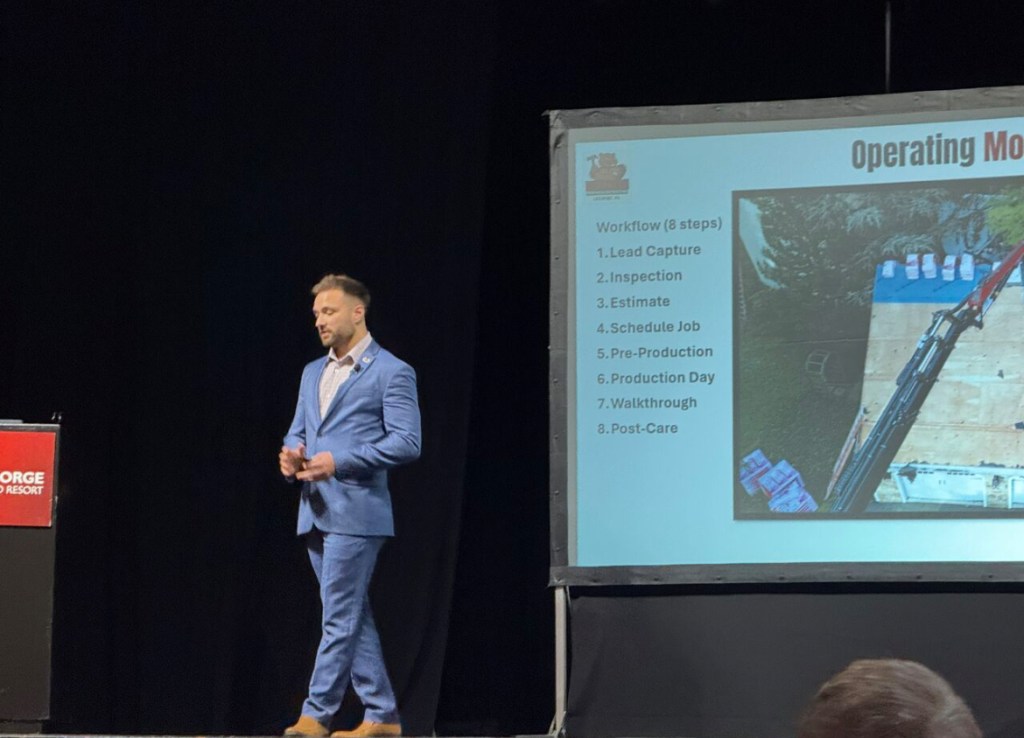
Speaking at a veteran entrepreneur pitch competition — the same strategic frameworks I use on stage are what I bring to every client engagement.
Quick take: This guide covers everything mid-market founders and revenue leaders need to know before bringing in outside sales expertise — what a consultant actually does, when it makes sense, what to look for, and what the engagement looks like.
Most sales problems aren’t talent problems. They’re systems problems. And most companies discover this too late — after they’ve cycled through reps, adjusted commission structures, and tried three different CRMs. If your pipeline is unpredictable, your close rates are flat, or your team is working hard without winning more deals, the issue is almost certainly upstream of the people.
A sales consultant comes in to fix the architecture. This guide breaks down what that actually means, what to expect from the engagement, and how to decide if it’s the right move for your company right now.
What a Sales Consultant Actually Does
The word ‘consultant’ gets used loosely, so let’s be specific. A sales consultant’s job is to diagnose the broken parts of your revenue engine and rebuild them so they work without you having to supervise every deal.
That means digging into your pipeline data, shadowing discovery calls, auditing your messaging, and mapping your current process against what’s actually happening on the ground. Most consultants find the same categories of problems: fuzzy ICP definition, weak positioning, discovery that doesn’t surface real buying criteria, and no consistent follow-up discipline.
Once the diagnosis is done, the work shifts to building. That could mean a revamped outbound sequence, a new discovery framework, a qualification scorecard, or a full playbook your team can actually execute. The goal is a system — not a one-time training event that gets forgotten in two weeks.
When It Makes Sense to Hire One
Timing matters more than most people realize. A sales consultant is highest leverage in specific situations:
You’re a founder still closing most of the deals yourself and need to build a repeatable process before you hire your first dedicated rep.
You have a team in place but close rates have plateaued and you can’t identify why.
You’re moving upmarket — selling to larger companies with longer cycles, more stakeholders, and different buying dynamics than what your team is used to.
You’ve tried sales training programs and didn’t see lasting results, and you suspect the issue is process rather than skills.
You’re preparing to scale hiring and need a documented playbook before you bring new reps on.
It’s also worth being honest about when it doesn’t make sense. If you don’t have product-market fit yet, a sales consultant can’t fix that. If your team isn’t coachable, or leadership isn’t willing to change anything based on what the consultant finds, the engagement will produce a report that sits in a folder. The investment pays off when leadership is ready to act on what they find.
Scalable sales systems don’t just close more deals — they compound. The right process turns every pipeline into a predictable revenue engine.
In-House Sales Leadership vs. Outside Consultant
One of the most common questions I get: ‘Should we hire a VP of Sales or bring in a consultant?’
The short answer is that these solve different problems. A VP of Sales is a long-term organizational hire who owns the team, the quota, and the culture. A consultant is a targeted engagement designed to fix something specific — fast. The timelines are different, the costs are different, and the outcomes are different.
A mid-market VP of Sales costs $180,000–$250,000 in base salary before commission and benefits. A consultant typically engages on a project or monthly retainer basis. More importantly, a consultant can often compress 6–12 months of trial-and-error into a 90-day diagnostic and build phase — which is exactly what you need if you’re trying to get your process documented before your next growth stage.
In many cases the right sequencing is: consultant first to build the playbook, then VP of Sales to run it.
What to Look for When Evaluating Sales Consultants
Not all consultants are the same, and the differences matter enormously. A few things worth evaluating seriously:
Verifiable results, not just frameworks
Anyone can present a methodology. Ask for specific outcomes: revenue numbers, close rate improvements, pipeline velocity changes. If they can’t point to concrete results with real companies, that’s a signal.
Experience selling what you sell
B2B enterprise sales, B2B SMB, and B2C are completely different disciplines. A consultant who built their track record in transactional retail sales will struggle with complex, multi-stakeholder B2B deals. Make sure their experience matches your context.
Operator experience, not just advisory experience
There’s a difference between someone who has advised companies on sales and someone who has actually run a sales function, hit quota, and built a team. Both can be valuable, but they offer different things. If you need implementation and not just strategy, operator experience matters.
Fit with your team’s culture
A consultant who comes in with a combative or dismissive approach toward your existing team will create friction that undermines the engagement. Look for someone who can diagnose without demoralizing — who can be direct without being corrosive.
What the Engagement Typically Looks Like
Structure varies, but here’s how a well-run engagement typically unfolds across the first 90 days:
Weeks 1–2: Diagnostic
Pipeline audit, CRM review, rep interviews, call shadowing, messaging analysis. The goal is to get to root cause — not surface symptoms.
Weeks 3–6: Build
Playbook creation, ICP refinement, messaging overhaul, process redesign. This is where the deliverables take shape.
Weeks 7–12: Implementation and coaching
Rolling out the new process, live coaching on calls, deal review sessions, manager enablement. The goal is to make sure the new system actually takes hold in the team’s behavior — not just in a document.
Ongoing retainer engagements look different — typically a monthly cadence of pipeline reviews, coaching, and strategic guidance as the business evolves.
What You Should Expect to Pay
Sales consulting fees vary based on scope, the consultant’s track record, and the structure of the engagement. For a full diagnostic and build engagement at the mid-market level, expect project fees in the range of $10,000–$30,000. Monthly retainers for ongoing advisory and coaching typically run $3,000–$8,000 per month.
Performance-based arrangements exist but aren’t the norm — most consultants who have a real track record prefer fee structures that aren’t contingent on variables they don’t fully control (rep execution, market conditions, leadership follow-through).
The ROI math usually works if you’re rigorous about it. If improving your close rate from 18% to 24% on a $1M pipeline is worth $60,000 in incremental closed revenue, a $15,000 engagement pays back quickly. The companies that hesitate on the investment are often the ones spending twice as much on underperforming reps they should have fixed or replaced months ago.
The companies I work with already have driven people. My job is to give them a system that makes their effort convert.
Questions to Ask Before You Hire
Can you walk me through a specific engagement where you changed a company’s close rate? What was the root cause and what did you change?
What’s your diagnostic process? How do you figure out what’s actually broken before you start building?
What do you need from us to make this work? What’s on leadership to do, not just the sales team?
What does success look like at 90 days, and how will we measure it?
What are the most common reasons these engagements don’t produce the results clients hoped for?
A consultant who can answer these questions specifically and honestly — including the last one — is worth your time. One who deflects or goes generic probably isn’t.
The Bottom Line
Sales is a system, and systems can be fixed. If your revenue is unpredictable, your pipeline is stalling, or your team is working hard and not winning, the problem isn’t effort — it’s architecture. The right consultant finds the architecture problem and rebuilds it so the effort your team is already putting in actually converts.
If you’re a mid-market company in the B2B space and you’re ready to stop guessing at what’s broken, let’s have a conversation. Reach out directly at Gmail@Samkensinger.com.
A periodic “timing touch” (simple question: “still a priority?”)
This turns “lost” deals into future wins.
Follow-Up Templates You Can Use Today
Same-day recap (after a call)
Subject: Next steps “___ — good talking today. Here’s what I captured:
Goal: ___
Biggest constraint: ___
Success looks like: ___
Next step: ___ on ___ at ___. Before then, can you send ___ / confirm ___?”
Day-2 nudge (short, specific)
“Quick one — are you leaning toward option A or B? Either is fine; I just want to make sure I’m building the right path.”
Close-the-loop (Day 9–14)
“Should we keep this open or close it out for now? If timing changed, no problem—just tell me what quarter this becomes real.”
Breakup (polite)
“Totally fine if this isn’t a priority anymore. If you want, I can send a 1-page summary you can keep on file in case it comes back up.”
The Most Important Part: Track It in Your CRM
Ghosting explodes when follow-up is left to memory.
Minimum CRM requirements:
Next follow-up date required on every open deal
Stage definitions (what’s required to move forward)
Reason codes for closed-lost (timing, budget, no decision, competitor)
If it isn’t tracked, it isn’t real.
Want this installed in your business?
A follow-up system shouldn’t live in someone’s head—and it shouldn’t depend on a single “killer rep.” If you want me to build this into your sales process (cadence, templates, stage exit criteria, and CRM enforcement) so prospects stop ghosting and deals stop stalling, email Gmail@samkensinger.com with:
your industry
average deal size
typical sales cycle length …and I’ll tell you the fastest path to tightening it up.
Sales are the lifeblood of any business. Yet, many companies struggle with stagnant revenue, inefficiencies in their sales processes, or teams that underperform. This is where sales consulting services come into play, offering actionable strategies and insights to unlock a company’s full revenue potential. In this blog, we’ll explore how sales consulting can address common challenges and drive growth for your business.
Common Sales Challenges Businesses Face
Inefficient Sales Processes: Many organizations lack streamlined workflows, leading to missed opportunities and decreased productivity.
Underperforming Sales Teams: Without proper training and motivation, sales teams may struggle to meet their quotas.
Market Misalignment: Businesses often fail to align their sales strategies with current market trends and customer needs.
These challenges are not insurmountable but require expert guidance to resolve effectively.
How Sales Consultants Solve These Problems
Sales consultants bring an outsider’s perspective combined with deep industry expertise. Here are some key ways they help:
Refining Sales Strategies: Consultants analyze your current sales approach and identify areas for improvement. This might include optimizing pricing models, targeting new markets, or refining value propositions.
Enhancing Team Performance: Through customized training programs and performance metrics, consultants help your team achieve and exceed their goals.
Implementing Advanced Tools: From CRM systems to analytics platforms, consultants ensure your team has the right tools to succeed.
The ROI of Hiring a Sales Consultant
Investing in sales consulting isn’t just an expense—it’s a strategic move that delivers measurable returns. Businesses that work with consultants often see:
Increased revenue due to improved sales processes.
Higher close rates and larger deal sizes.
Better team morale and reduced turnover.
For example, during my time as Director of Corporate Sales at JDog Brands, I led a team that achieved a 31% revenue increase within 11 months by implementing tailored strategies and fostering a results-driven culture.
Ready to Drive Revenue Growth?
If your business is ready to overcome sales challenges and achieve new levels of success, I can help. Visit my page to learn more about what I offer and how I’ve helped other businesses thrive. Better yet, schedule a free consultation today to discuss your goals and start building a roadmap to success.
Sales can feel like a numbers game, but what separates the extraordinary from the average is often the willingness to break the mold. In this post, I’ll share some basic sales tactics to help you stand out, build stronger connections, and close more deals.
Reverse the Sales Process
Instead of starting with a pitch, begin with discovery. Ask open-ended questions to understand your client’s pain points:
What’s their biggest challenge right now?
How do they measure success in their role? Once you truly understand their needs, tailor your pitch to offer a solution they can’t resist.
Use the Power of Stories
Humans connect with stories more than statistics. Share success stories from your past clients to demonstrate your value. For example, one of my consulting clients initially struggled to close deals in a highly competitive market. By implementing the unconventional sales strategies outlined in my eBook, they not only increased their close rate by 30% but also built stronger relationships with their clients. In their own words, “It felt like I was doing something no one else was… Like I have a secret weapon!.”
Be Unexpectedly Generous
A small, unexpected gesture can leave a lasting impression. Send a handwritten thank-you note, some swag, or bring snacks to your next meeting. Put blue ink on paper any chance you can. This builds trust and keeps you top-of-mind.
Build a Connection First, Then Pitch
Traditional sales often jump straight into the pitch, but building a genuine connection before presenting your offer can make all the difference. People prefer to buy from those they trust, and trust starts with rapport.
Start conversations with open-ended questions like:
“What challenges are you facing in [their specific industry or situation]?”
“If you could improve one thing about your [process/system], what would it be?”
Listen actively, and respond with empathy and insight. For example, a real estate client once shared their frustration about losing leads due to inefficient follow-up. Instead of pitching immediately, I shared a quick tip about automating follow-ups. This not only demonstrated value upfront but also laid the groundwork for a deeper conversation about my consulting services.
By prioritizing connection over a hard sell, you establish credibility and set the stage for a successful pitch.
Build a Connection First, Then Pitch
Traditional sales often jump straight into the pitch, but building a genuine connection before presenting your offer can make all the difference. People prefer to buy from those they trust, and trust starts with rapport.
Start conversations with open-ended questions like:
“What challenges are you facing in [their specific industry or situation]?”
“If you could improve one thing about your [process/system], what would it be?”
Listen actively, and respond with empathy and insight. For example, a real estate client once shared their frustration about losing leads due to inefficient follow-up. Instead of pitching immediately, I shared a quick tip about automating follow-ups. This not only demonstrated value upfront but also laid the groundwork for a deeper conversation about my consulting services.
By prioritizing connection over a hard sell, you establish credibility and set the stage for a successful pitch.
Leverage the Power of Reciprocity
Giving something valuable upfront can encourage your potential client to reciprocate by engaging with your services. This could be a free resource, a quick consultation, or actionable advice.
For example, if you’re offering business consulting, provide a brief market analysis tailored to their industry or share a key strategy from your eBook. In one case, I offered a free 15-minute call to identify bottlenecks in a client’s sales process. That small investment of time resulted in a long-term consulting partnership because the client saw immediate value and trusted my expertise.
When you provide value first, it builds goodwill and positions you as someone genuinely interested in their success.
Build a Connection First, Then Pitch
Traditional sales often jump straight into the pitch, but building a genuine connection before presenting your offer can make all the difference. People prefer to buy from those they trust, and trust starts with rapport.
Start conversations with open-ended questions like:
“What challenges are you facing in [their specific industry or situation]?”
“If you could improve one thing about your [process/system], what would it be?”
Listen actively, and respond with empathy and insight. For example, a real estate client once shared their frustration about losing leads due to inefficient follow-up. Instead of pitching immediately, I shared a quick tip about automating follow-ups. This not only demonstrated value upfront but also laid the groundwork for a deeper conversation about my consulting services.
By prioritizing connection over a hard sell, you establish credibility and set the stage for a successful pitch.
Leverage the Power of Reciprocity
Giving something valuable upfront can encourage your potential client to reciprocate by engaging with your services. This could be a free resource, a quick consultation, or actionable advice.
For example, if you’re offering business consulting, provide a brief market analysis tailored to their industry or share a key strategy from your eBook. In one case, I offered a free 15-minute call to identify bottlenecks in a client’s sales process. That small investment of time resulted in a long-term consulting partnership because the client saw immediate value and trusted my expertise.
When you provide value first, it builds goodwill and positions you as someone genuinely interested in their success.
Master the Follow-Up
The fortune is in the follow-up, but it’s not just about persistence—it’s about being strategic. Most deals aren’t closed after the first interaction, so staying top-of-mind without being pushy is critical.
Here’s an unconventional approach: Send follow-ups that add value rather than just “checking in.” For instance:
Share an article or resource relevant to a previous conversation.
Provide a quick tip or insight tailored to their business.
Highlight a success story from a similar client.
For example, after an initial meeting with a potential client, I followed up with a case study demonstrating how another company overcame a similar challenge using strategies I implement. The client appreciated the personalized touch and signed on for my services shortly after.
This approach not only keeps the conversation alive but also reinforces your expertise and thoughtfulness.
Conclusion: Take Your Sales Strategy to the Next Level
These strategies aren’t just about closing a sale—they’re about creating lasting relationships and delivering real value to your clients.
If you’re ready to transform your sales approach and achieve measurable results, visit the Services page on my website. There, you’ll find a range of consulting options tailored to help you implement these strategies and more. Whether you’re looking to optimize your sales process, improve client engagement, or grow your business, I’m here to guide you every step of the way.
Start making unconventional your new normal—reach out today!
In the world of small business, effective sales management is not just about meeting quotas; it’s about building a strategy that ensures consistent growth. By focusing on three essential pillars—goal-setting, accountability, and optimization—your business can thrive in competitive markets.
Defining SMART Sales Goals
Strategic goals are the foundation of any successful sales strategy. Use the SMART framework (Specific, Measurable, Achievable, Relevant, Time-Bound) to create objectives that align with your business’s broader vision. For small businesses, these might include increasing revenue by 15% in six months or acquiring 50 new local customers this quarter.
Pro Tip: Regularly review these goals with your team to ensure alignment and momentum.
Building Accountability into Your Sales Process
A culture of accountability empowers your sales team to take ownership of their results. Use sales tracking tools and CRM systems to provide real-time insights into performance metrics. Weekly one-on-one meetings can uncover challenges and help individuals stay on track.
Actionable Insight: Encourage sales reps to share their successes and challenges in team meetings to foster collaboration and learning.
Embracing Continuous Sales Optimization
The most successful sales strategies evolve over time. Regularly analyze your sales funnel, customer interactions, and conversion rates to identify opportunities for improvement. Whether it’s refining your pitch, updating follow-up templates, or adopting new sales tools, continuous optimization ensures sustained growth.
Quick Win: Invest in training sessions for your team to keep them updated on industry trends and techniques.
Learn More About Driving Sales Success
By implementing these strategies, you can transform your sales process into a competitive advantage. If you’re ready to take your small business to the next level, explore the tailored consulting services offered at SamKensinger.com. From strategic planning to hands-on implementation, I’m here to help you achieve your sales goals. You can also get in touch with me directly at Gmail@SamKensinger.com
As a leader, it’s important to set the tone for your team. You want to be someone that your team can look up to and emulate. But what does it mean to lead by example? And how do you go about doing it?
Leadership isn’t about telling people what to do, but rather guiding them with your own example. The best leaders are self-models who show dedication by being professional and doing the right thing over the easy one, all of the time–even when they think no one is watching.
Let’s take a look at some ways you can set the tone for those around you and inspire others in their work
Respect
The dictionary defines respect as “a feeling of admiration or esteem.” When it comes to respect in the workplace, it’s a two-way street. Your employees should respect you because they admire your work ethic and have high esteem in your ability to lead. However, respect is also something that’s earned. Just because you’re the boss doesn’t mean your employees will respect you automatically.
In order to earn respect, you need to lead by example. Show your employees that you respect their time, their effort, and their ability to do their job well. When you show respect, you set the tone for a respectful work environment and build the foundation for mutual respect.
We’ve talked about this in previous posts, but you should never look to publicly correct someone, shame them, or be overtly disrespectful. This seems like common sense, but we have all had a boss that treated us poorly and barked orders instead of articulating them. Unfortunately, that type of behavior can force multiply and create toxic leaders who believe the loudest voice holds the most authority.
Inspire
What does it mean to lead by example? To most, it means being the kind of person that others can look up to and aspire to be like. To me, It means having a strong work ethic and always giving 100%. Leading by example means setting a standard and following it yourself. It means approaching challenges in a methodical way, instead of trying to use brute force or avoiding them entirely. This doesn’t means always maintaining a positive attitude, you don’t have to skip through the halls singing; but you should leave the impression of confidence even in the face of adversity.
When you lead by example, you inspire those around you to do better and be better. You show them that it is possible to achieve anything they set their mind to. This is crucial because you do or will have someone on your team that doesn’t truly believe the can accomplish anything, likely because they are coming from a team with a poor leader.
Inquire
To lead by example also means to be inquisitive and get to know your people. It’s not just about giving direction but asking for feedback. You should conduct a debrief after every project to learn what could have been done better, this includes being receptive to constructive criticism about yourself.
If you’re not being inquisitive, you won’t get the information you need to make informed decisions. If you don’t ask for feedback, you won’t know what people are thinking or how they feel. If you’re not receptive to constructive criticism, you won’t learn and grow as a leader.
This also sets the stage for open communication. Your team should feel comfortable enough to come to you with questions, concerns, or unsolicited feedback on the project. I’m not saying anyone should be allowed to come into your office and say, “hey, I think you’re an asshole!” Rather, there should always be a channel for your team to express their thoughts and your team should be comfortable giving input. If you’re doing it right, I would say the odds of an outburst like that are low.
Accountability
Accountability is key. It means holding yourself and your team accountable to timelines, milestones, goals and action items. Performance is important, and if its not measured then it’s improved. At least, how could you know if it has? As a leader , it’s important to provide valuable feedback for your team as they fufill your expectations for them, as well as the ones they set for themselves.
Don’t forget, you need to be able to show that you’re following through on your commitments as well. That means being on time, meeting deadlines and taking responsibility for your actions. If you don’t keep up with your teams timelines, especially if they are highly effective, then you will create a bottle neck within your organization. Enable your team for success, then keep pace with them.
Composure
Leading by example means setting the standard for how you want your team to maintain composure under pressure, stay level-headed when emotions are running high, and always making decisions with a clear head. Remember, it’s not enough for just you to be able to withdraw [emotionally] from a stressful situation; your team has to be just as disciplined.
Of course, that’s not always easy. We’re only human, after all. But it’s important to remember that our emotions should never influence tough decisions with a lot at stake. The only exception to that is empathy. Even in the heat of the moment, we must always be aware of how our words and actions will affect others.
Otherwise, you could escalate the situation beyond saving. If we can’t eliminate emotion from our decision-making process, then we need to consult with our team members or superiors before moving forward. By modeling composure and restraint, we can set the tone for a calm and productive workplace.
Conclusion
So, what does it mean to lead by example? It means embodying the characteristics you wish to see overtly from your team. Setting a standard, then following through with yourself. Earning the respect of those around you and not demanding it or believing that you inherited it with the position.
You got to where you are now, a leadership role, by proving to yourself and others that you have a tenacious work ethic. If you continue to practice what you preach and always look to improve, you can expect similar habits from your team.
Did I say anything that resonated with you? If so, let me know at Gmail@SamKensinger.com


















 Sam Kensinger